For people who write novels and non-fiction
The manuscript and everything you need to write it, in one place.
Scribenda keeps together the text, the story bible, the research and the revision of a book. You write on a white page with the contents next to it. When in doubt you ask the book a question, and the answer cites the passages it comes from.
No card needed to start. You can download the whole book at any time.
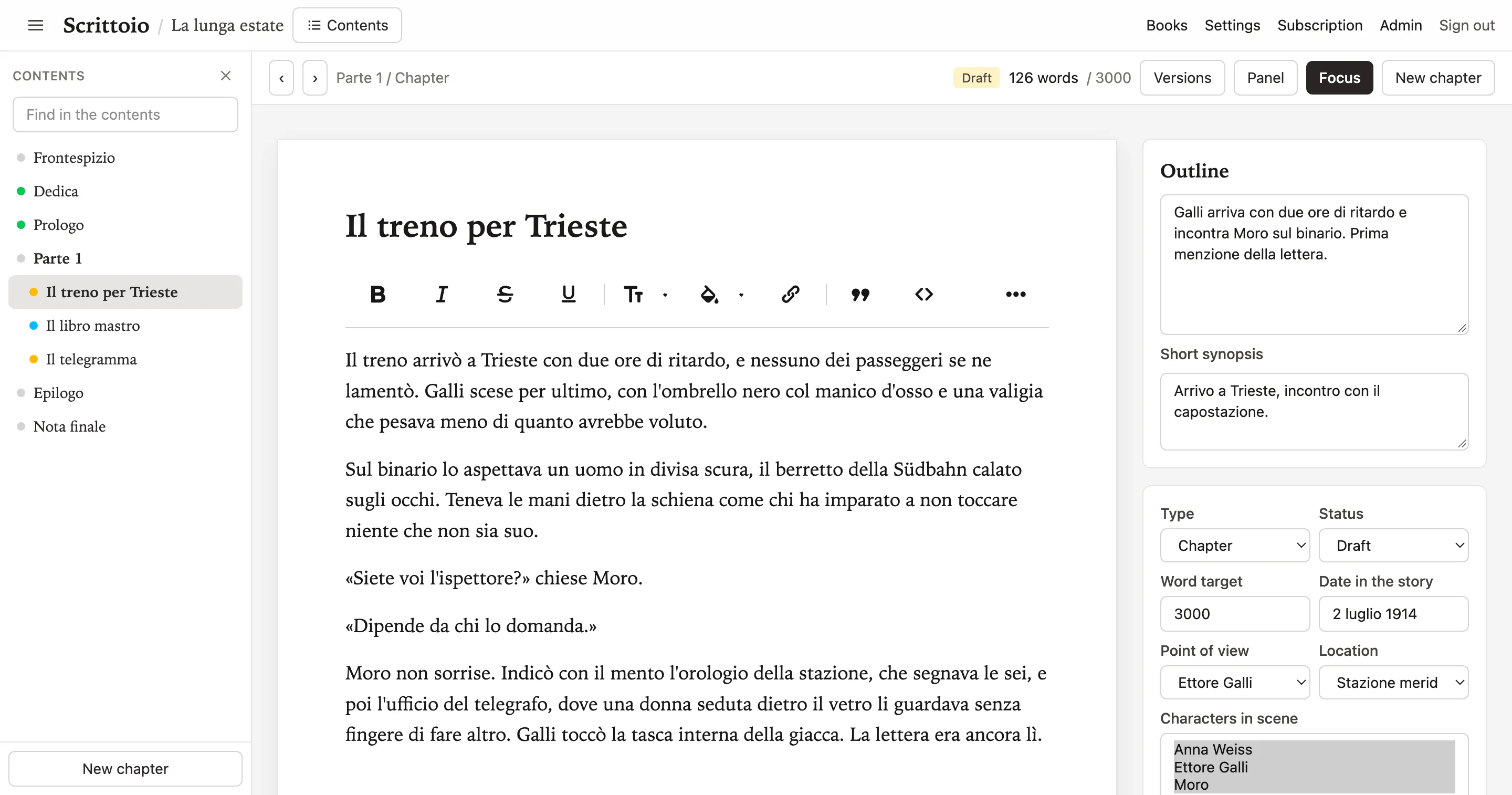
It came from a real novel
Scribenda comes from a historical novel written inside a folder of markdown files. When the work was done, the folder held this.
- words
- 98,700
- manuscript files
- 44
- bible documents
- 5
- verified historical facts
- 26
Every area of Scribenda matches something that existed in that folder and was used. Continuity notes were files per part, the chain of clues lived in a separate document, a script put the interludes back in place before compiling the volume. Here they are data of the book, linked to each other.
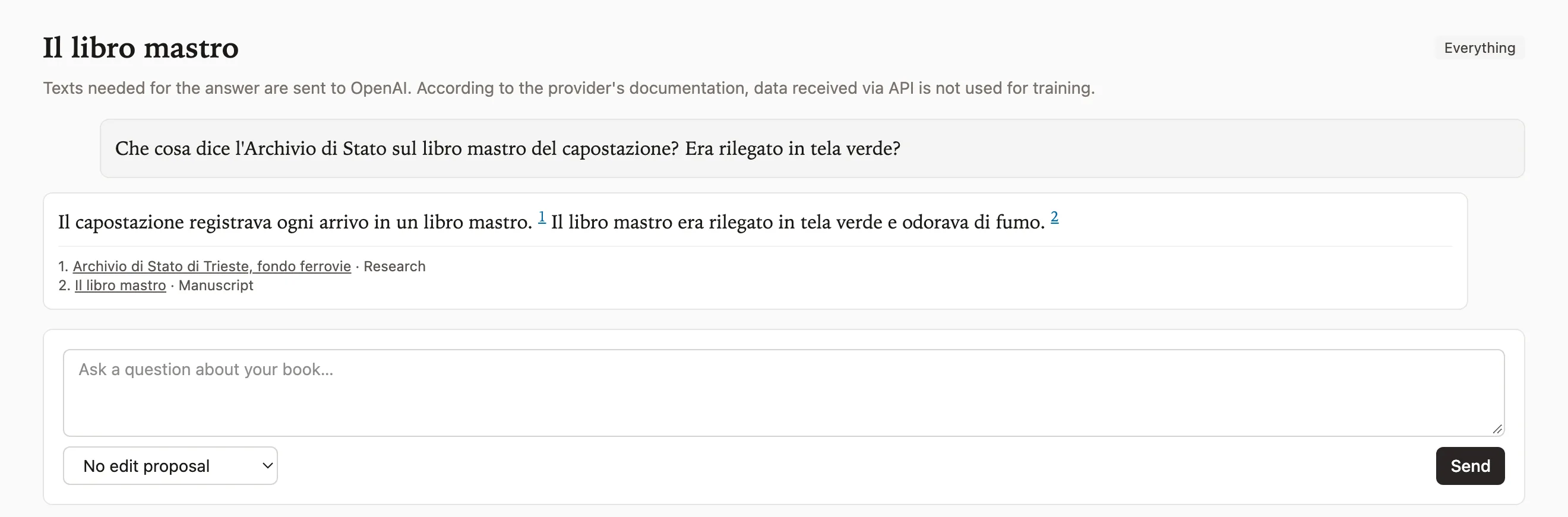
Chat with the book
Answers say where they come from
Ask your book a question and the answer cites the passages it relies on. Each number opens the exact point the sentence comes from, even when it sits in a research PDF.
When the answer is not in the book material, the chat tells you. Search combines semantic similarity and full-text search across manuscript, bible, notes and research.
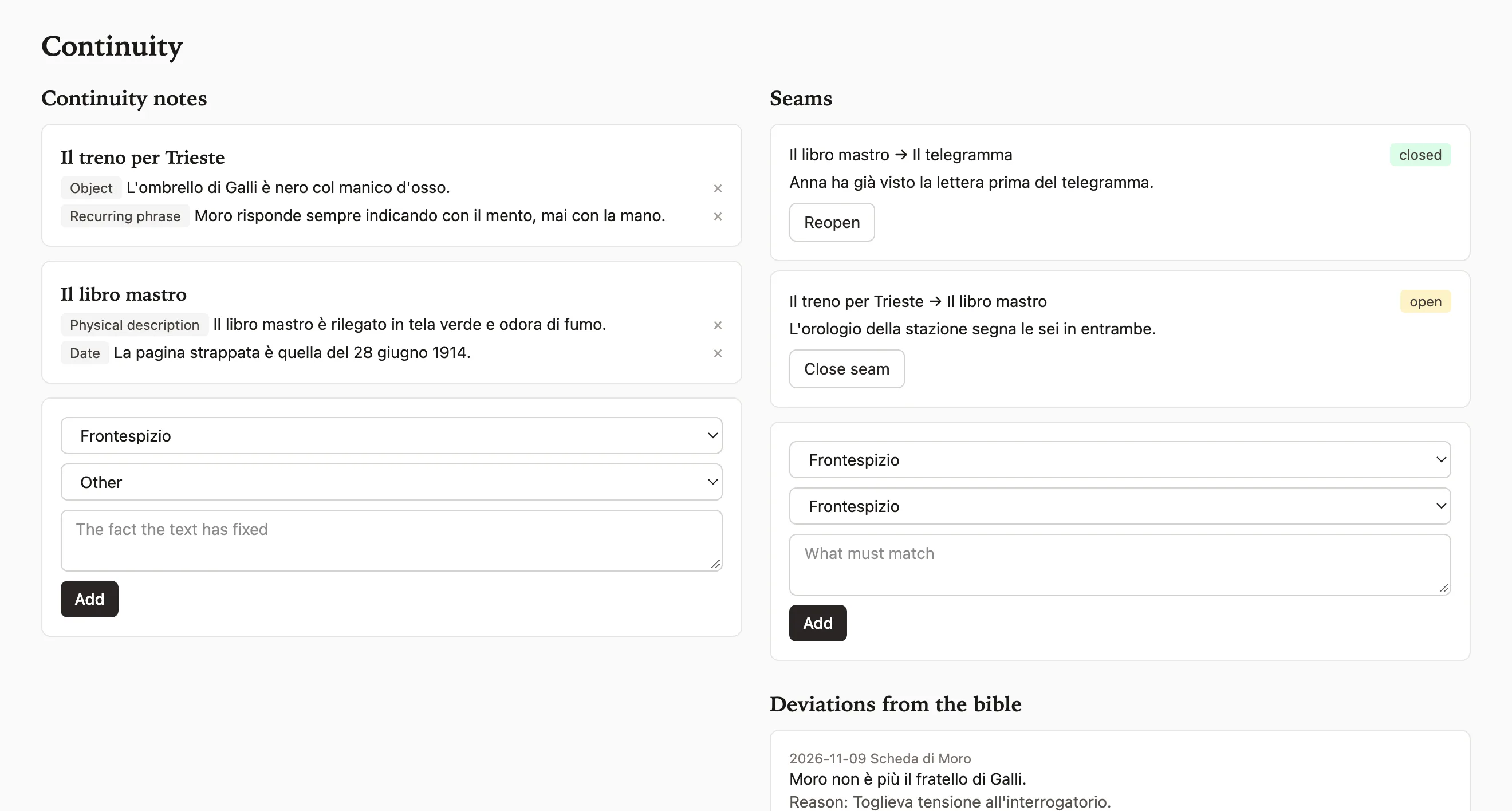
Continuity
Facts the text has fixed stay fixed
Galli's umbrella has been black with a bone handle since chapter one. A continuity note remembers it, and the writing panel shows it to you when you reach chapter twelve.
Seams track the points where two sections must match. Deviations from the bible stay written with date and reason.
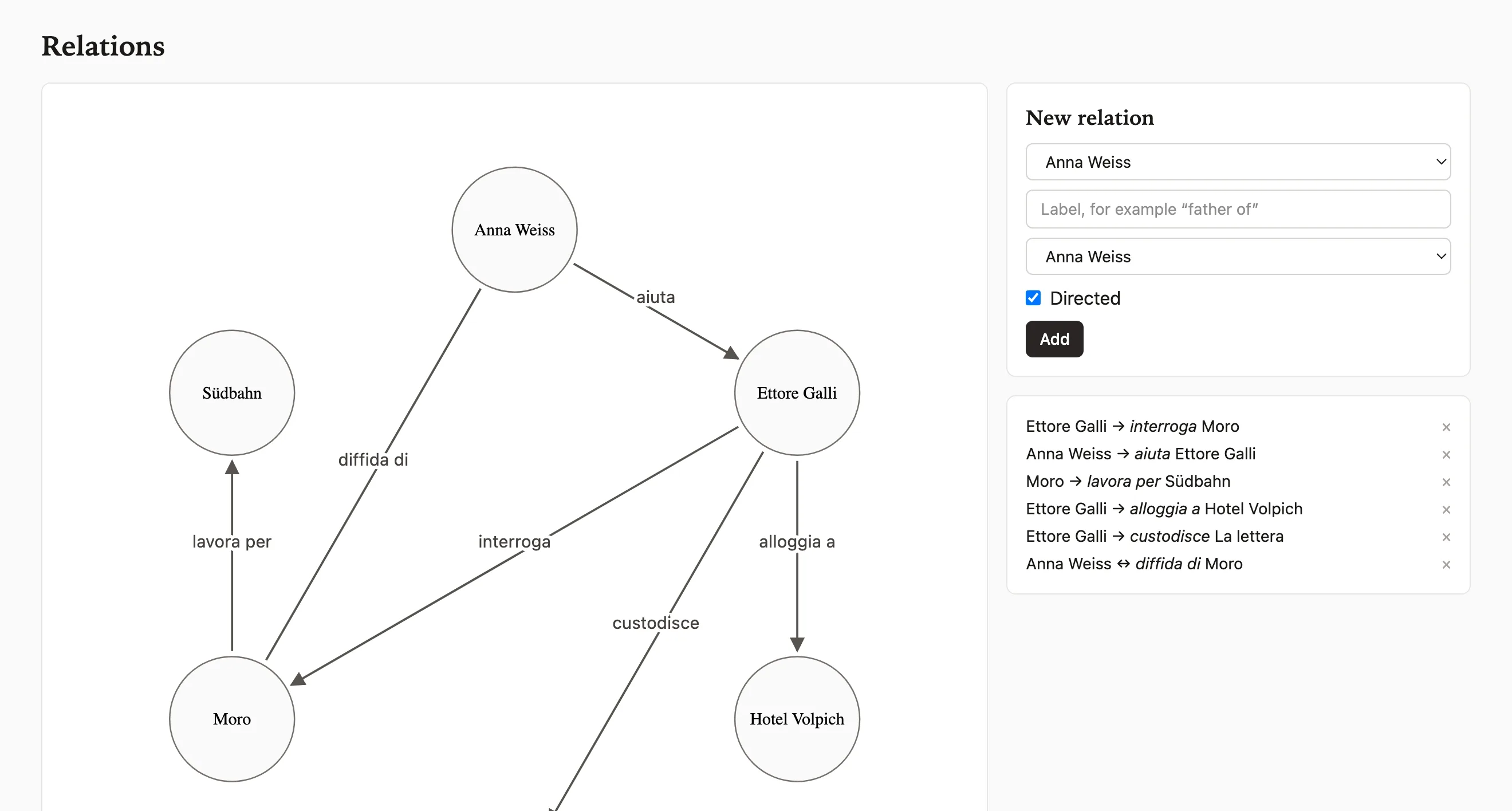
Story bible
Characters, places and relations the text recognizes
When a chapter names a character, by name or by a nickname, Scribenda records it. From the card you see which sections it appears in.
Relations have a label and a direction and you read them on a map. The binding style guide goes into every chat request, so the answers follow your rules.
Plot
Every setup waits for its payoff
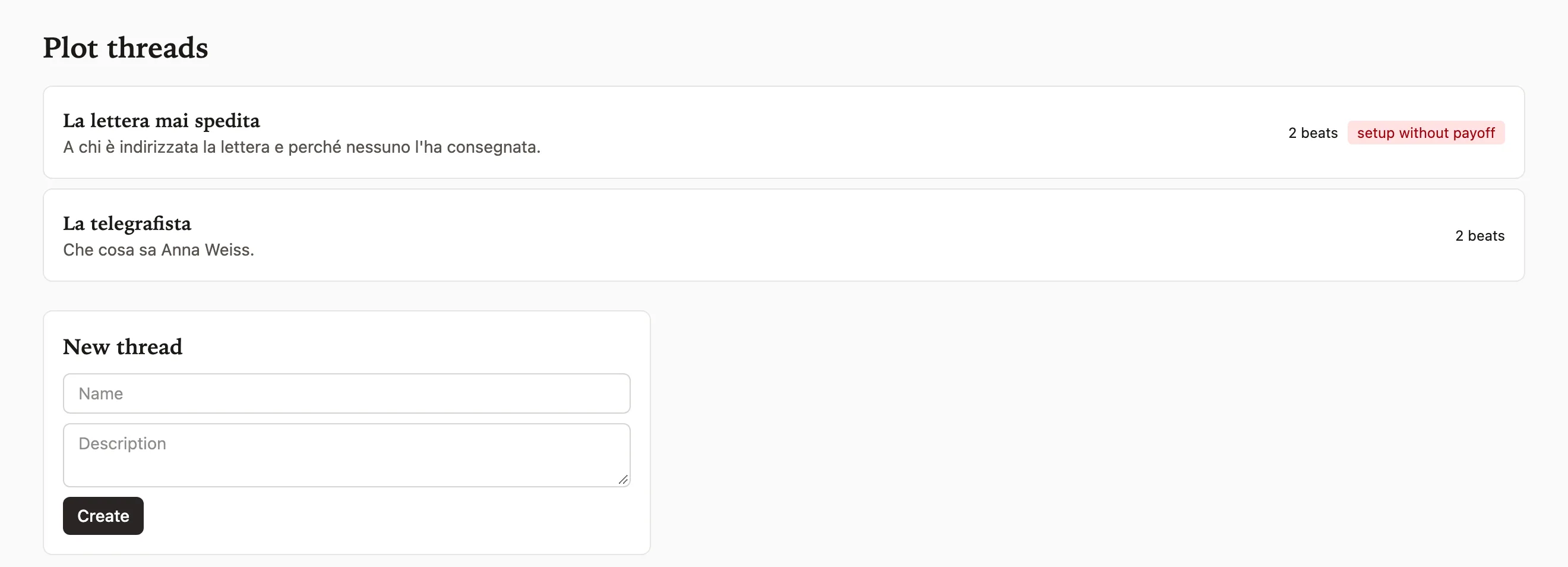
A plot thread is a series of beats linked to sections, and each beat is a setup or a payoff. Scribenda flags threads that have a setup and no payoff.
The timeline reads in two orders: by date, and in the order the reader meets the events in the book.
Research and sources
Research becomes part of the book
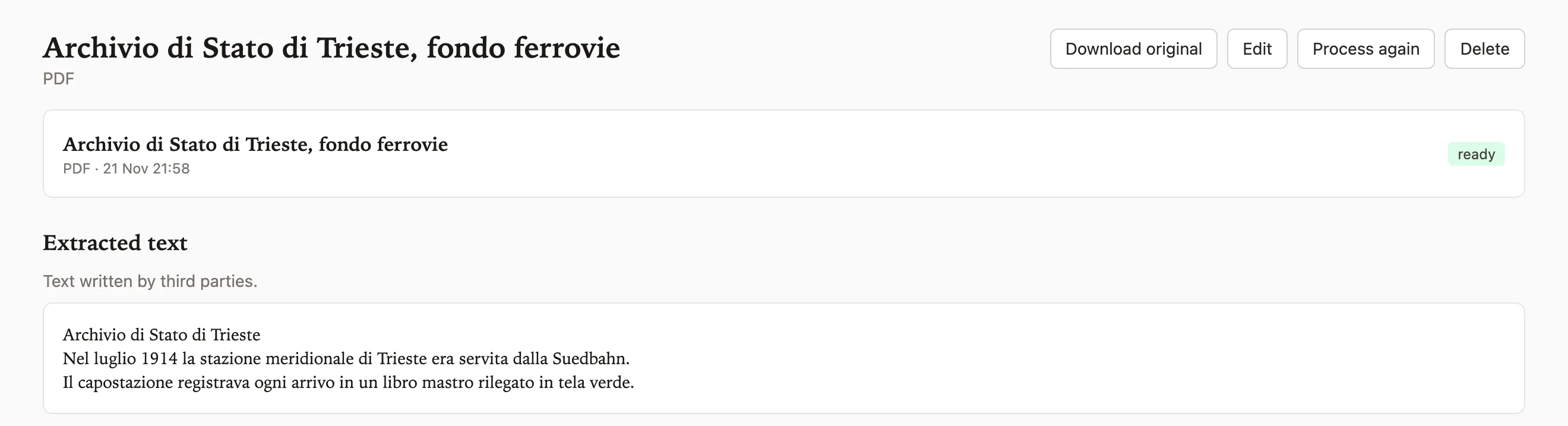
Upload PDF, DOCX, images and web addresses. The text is extracted and made searchable, and the chat cites it the way it cites the manuscript.
Every historical fact has its verification status and knows which document it comes from. When you depart from the record, you declare it as narrative license.
Every area of a book
Each area links to the others. A card knows which chapters it appears in, a fact knows which sections use it, a seam joins two sections.
Manuscript
A tree of sections that is also the compile order. Outline, status and word target for every chapter.
Story bible
Concept, character and place cards, relations, style guide and typography rules.
Plot and timeline
Events in chronological order and in reading order. Plot threads that flag setups with no payoff.
Continuity
Three tools: notes on facts the text has fixed, seams between sections, deviations from the bible.
Revision
Three tools: revision passes with a report, comments on the text, edits suggested by the editor.
Research
An archive in folders for PDF, DOCX, markdown, images, web pages and notes, with extracted, searchable text.
Sources
A list of facts with five verification statuses, citations, documents and linked sections.
Progress
Work phases, words per part and per day, open seams, facts to verify.
An unpublished manuscript stays yours
No text from your books goes into the application logs. When you use the chat, the passages needed for the answer go through OpenRouter, which forwards them to the model provider named in the settings; on every request the application asks to use only providers that do not collect user data.
You can download the whole book in markdown with the original files on every plan, even after cancelling, and delete the account with all its data.
How we handle your textsBring your book to Scribenda
Import a folder of markdown or a DOCX, or start from one of the templates (novel, historical novel, mystery, non-fiction).